
In the global food ingredient supply chain, quality standards are non-negotiable. B2B buyers from North America, Europe, and the Middle East enforce strict parameters regarding microbiological loads, moisture uniformity, and sensory consistency. Traditionally, sun-drying was the primary method for processing agricultural crops like onions and garlic. However, modern commercial demands have made sun-drying obsolete for export-grade products, replaced entirely by closed convection dehydration tunnels.
Elimination of Environmental Contaminants
Open-air sun-drying exposes agricultural raw materials to environmental factors. Dust, sand, insect infestation, bird droppings, and animal pathing introduce severe microbiological hazards. Additionally, wind can blow foreign matter like plastic fragments, agricultural chemicals, or weeds onto the drying crop.
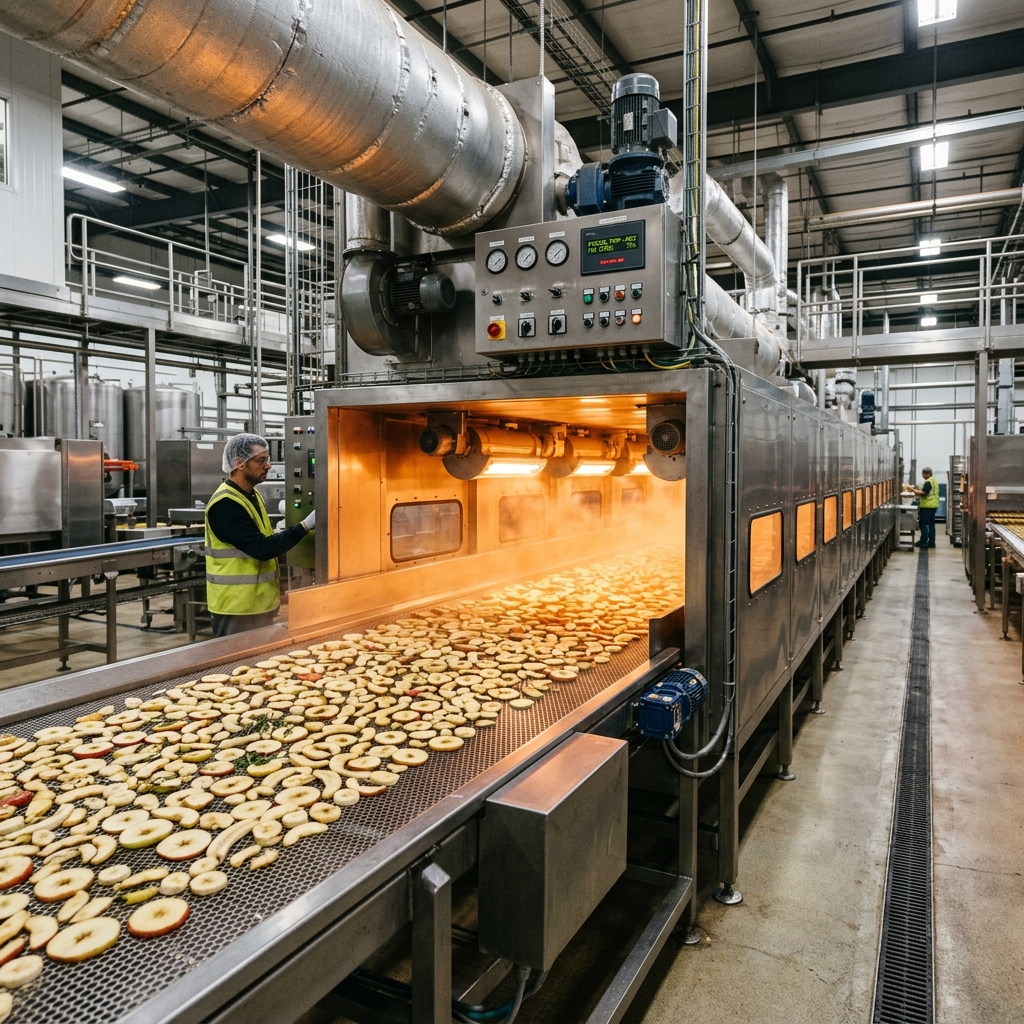
In contrast, convection belt dehydration takes place in a closed, pressurized stainless steel environment. Incoming air is passed through high-efficiency particulate air filters, guaranteeing zero external debris or dust settles on the vegetables during processing. This allows processors to maintain strict cleanliness standards and meet international food safety regulations.
Precise Control of Moisture Levels
Spices and dehydrated vegetables require moisture levels below 5.0% to prevent enzymatic degradation and mold growth during shipping container transit. Sun-drying relies on weather variables, leading to uneven drying. High humidity, cloud cover, or unexpected rain showers can reintroduce moisture, leading to mold development.
Closed convection tunnels maintain a highly uniform thermal zone (typically circulating filtered air between 60°C and 75°C). The temperature and airflow speed are adjusted dynamically based on the moisture profile of the incoming crop. This extracts water from the cellular structure evenly, yielding a product with consistent mesh sizing and zero clumping, which is critical for industrial spice blending operations.
Retention of Volatile Oils and Color
Excessive exposure to direct sunlight and ultraviolet (UV) radiation breaks down natural food pigments and dissipates volatile essential oils (like allicin in garlic or sulfur compounds in onions). This results in color fading and loss of flavor intensity.
Low-temperature convection dehydration removes water molecules without overheating the crop, preserving the golden colors, aromatic pungencies, and shelf stability required by seasoning manufacturers worldwide. By protecting these delicate flavor compounds, processors can deliver a high-quality product that retains its taste and aroma over a long shelf life.